Why two gauges in one sauna show different readings
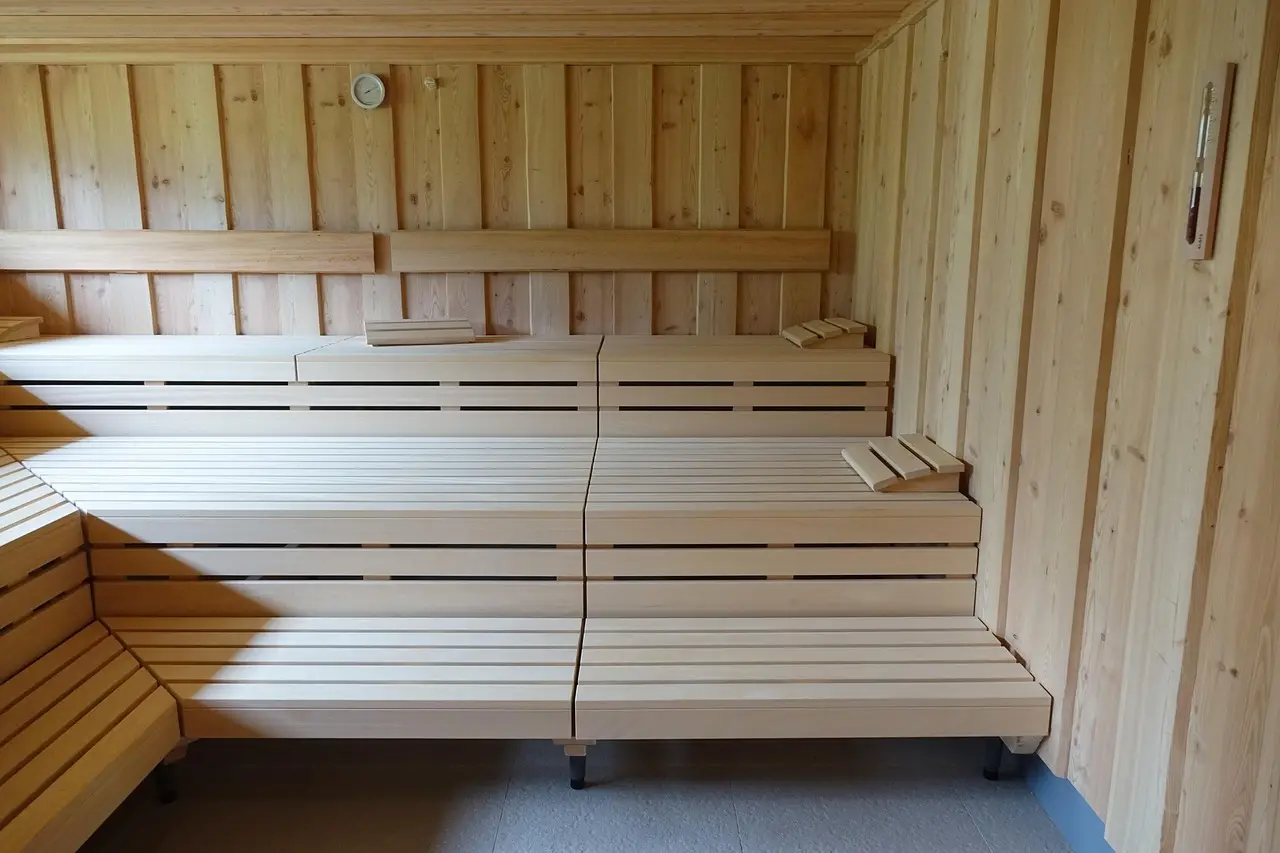
Two gauges disagreeing doesn't mean one is broken. Often they're just in different places, at different heights, reading different air. Start there.
Reasons they disagree
- Height. Upper benches are hotter than lower ones.1 A gauge at the ceiling and one at bench height are measuring different air. Obvious once you say it, easy to forget when the dials disagree.
- Position in the room. One maker says installation location will greatly impact results.2
- Closeness to the heater or door. A maker's checklist asks if the sensor is too close to the sauna heater, or too close to the door.3
- Vents. The same maker says the sensor shouldn't be placed close to vents.3
- Different jobs. A wall thermometer and a heater control aren't built to show the same thing, even when both sit in one cabin and both claim to give "the temperature".
The wall gauge against the heater control
One maker says a wall thermometer will typically show less than the digital control. Why? The control displays the absolute hottest point in the sauna. The wall thermometer shows more of an average temperature in the bathing zone.2
That's one maker describing its own products. Other makers' controls may differ, so read your control's manual. The control side of this is in the heater sensor page.
What counts as a normal gap
- A slight difference between the measured temperatures is completely normal, according to one maker.3
- That maker asks whether the sensor and the thermometer sit in different parts of the room where the temperatures actually differ.3
- Its support page puts a number on when to start checking: a gap beyond 10–15 degrees. It doesn't say which scale.3
Your own manual may use another figure. Trust that over this page.
Reading the gap
- Gauge on the upper wall reads higher than the bench gauge. That fits what makers describe: hotter air sits higher.1
- Heater control reads higher than the wall gauge. One maker says this is typical, since the control shows the hottest point.2
- Both agree to within a little. Nothing to fix. A slight difference is normal.3
- One gauge is far off, and the positions match. Then the gauge or its sensor may be at fault. The maker's support page is the place to start.
Humidity readings differ too
A change in the temperature changes the relative humidity.4 Two hygrometers at different heights see different air temperatures. They can show different figures even when the steam is the same.
A sensible order to check
Go slowly. Change one thing at a time, and you'll know which change made the difference when the numbers finally line up or stay stubbornly apart.
- Write down where each gauge is. Height from the floor, distance from the heater and from the door.
- Compare like with like. Only a separate wall gauge may be moved, to sit beside the other one if its manual allows it. Leave the heater control sensor where the maker's manual puts it.
- Rule out the door and vents. A maker's own checklist starts with them.3
- Go to the maker. If the gap is still large, their support page is the next stop.
A good sauna has a relatively small temperature gradient between its seating levels.1 If yours has a big one, expect your gauges to disagree.
Sources used
- Sauna, Wikipedia
- 4" Round Thermometer, Finnleo
- UKU Sauna Control System support, HUUM
- Hygrometer, Wikipedia
More gauge pages
 How a sauna thermometer worksWhat's inside a dial or electronic sauna thermometer, what it senses, and why the number depends on where the gauge hangs.
 Sauna thermometer types: dial, electronic and cable sensorsThe kinds of sauna thermometer you'll see, from mechanical dials to cable sensors on heater controls, and how each one senses heat.
 How a sauna hygrometer worksWhat a sauna hygrometer measures, the main ways it senses humidity, and why its reading moves when the temperature changes.